When installed correctly, a paver system can last a lifetime. Achieving that level of durability requires obsessive attention to detail and a refusal to cut corners. As graduates of the Concrete Masonry and Hardscape Association (CMHA) installation course, we have the technical training to ensure your patio or walkway is built on a foundation that lasts. While these projects require an immense amount of labor, the result is a functional work of art. We have proudly completed numerous high-end hardscape projects across the Wasatch Front.
Certified Arborist · CMHA-certified hardscape installer · Dominator Sports Pro Installer · Utah DOPL Contractor License #10946300-5501
What a paver installation includes
Excavation and base preparation
Most of the work happens before a single paver is set. The base is what decides whether the surface stays flat and true over the years, and it is the part nobody sees in a finished photo.
CMHA-trained installation
We are graduates of the Concrete Masonry and Hardscape Association installation course, so the base depth, compaction, and edge restraint follow the standard rather than whatever is quickest.
Drainage worked into the layout
Patios get pitched to move water away from the house. Getting the slope right is invisible when it works and very obvious when it does not.
Cuts and detail work
Borders, curves, and inlays are where a paver job either reads as custom or reads as a kit. This is the slow part and we do not rush it.
Edge restraint and joint stabilization
The perimeter is the first place a patio fails. Proper restraint keeps the field tight so the pavers do not creep outward over the years.
Coordination with the rest of the yard
Sleeves for irrigation and lighting go in before the pavers do. Cutting into a finished patio later is a bad day for everyone.
Why paver base work matters on the Wasatch Front
Freeze and thaw is the thing that finds a shortcut. Water gets into a poorly built base, freezes, expands, and lifts the surface, and it does that repeatedly over a Utah winter. That is why base depth and compaction get so much attention on our jobs and why the CMHA training is worth naming. We have completed a number of high-end hardscape projects across the Wasatch Front, and the ones that hold up all have the same thing in common underneath.
Common questions
How long does a paver patio last?
Installed correctly, a paver system can last a lifetime. The pavers themselves are rarely what fails. It is almost always the base or the edge restraint underneath them.
Pavers or poured concrete?
Pavers flex with freeze and thaw instead of cracking across a slab, and individual pieces can be lifted and reset if you ever need to get at something underneath. Concrete is usually cheaper up front. Which one makes sense depends on the space and the budget, and we will give you a straight answer for your project.
Do pavers need sealing?
Yes, and we think it is worth doing. The timing matters more than most people expect. New pavers should not be sealed straight away, because calcium migrates up through the new material and leaves white staining, which is efflorescence. We come back to clean and seal once that has run its course, and we will tell you when the timing is right.
What does a paver patio cost?
It comes down to square footage, the paver you choose, site access, and how much excavation the space needs. We do not publish per-square-foot pricing, because the base work under the surface varies more than the surface does. Our projects start at $10,000, and hardscape is quoted in detail from the plan, for free, before anything starts.
Can you build on a slope?
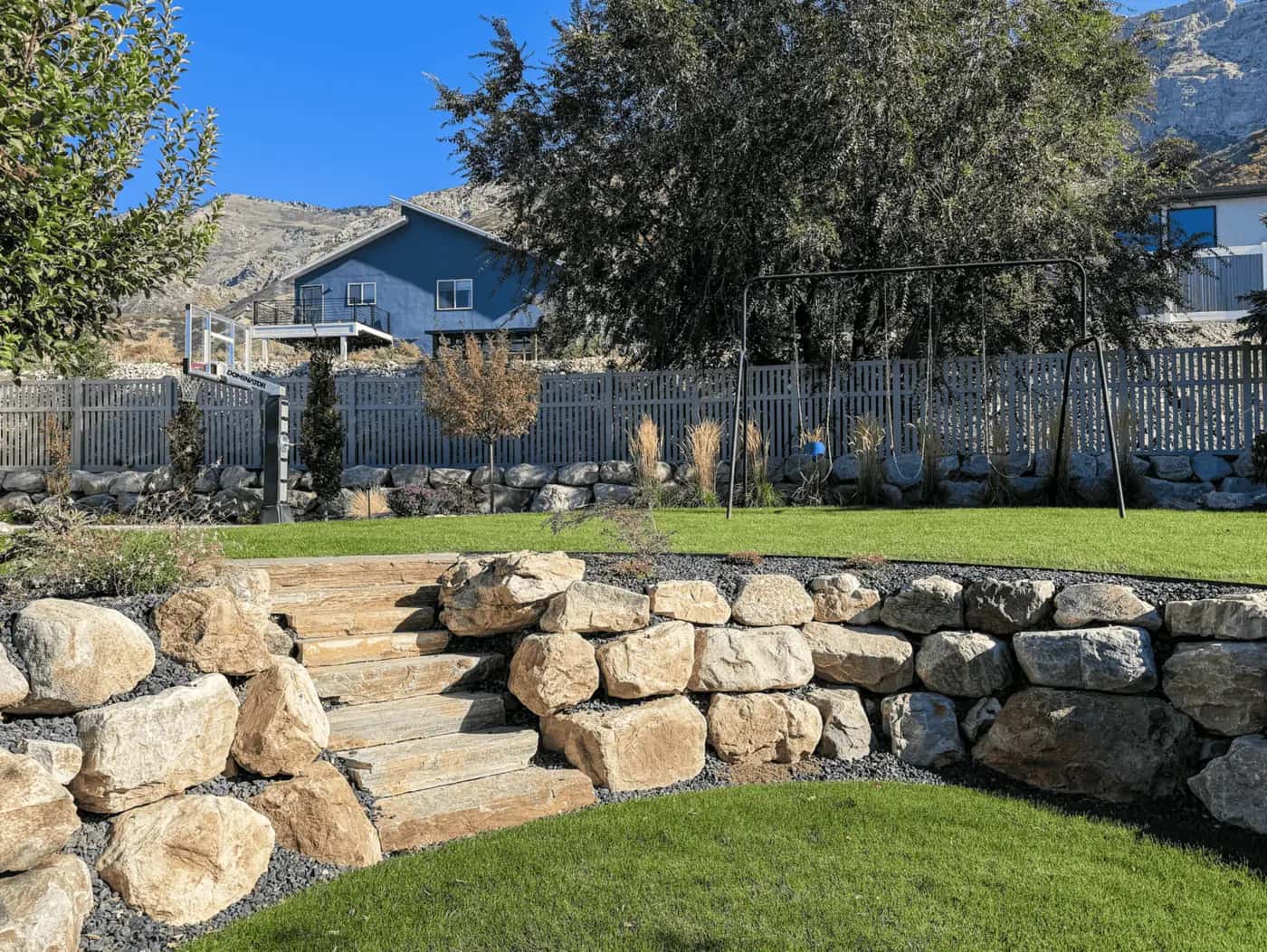
Yes, and slopes are common on lots here. A sloped site usually means retaining work alongside the patio, which is why paver projects and boulder walls often get designed together.
More reading
Related services
From bare lot to a backyard you never want to leave.
Free consultation and site analysis. Design plans are priced separately, and you get a fixed quote before any work begins. Serving Weber County.