
Not everything that saves water requires a contractor. As secondary water meters and allotment tracking roll out across Weber County, a few homeowner-applied products genuinely help, and one of them has been part of our own routine for about a decade. None of this is a service we sell, which is exactly why we are comfortable recommending it: this is what we would tell a neighbor over the fence.
Hydretain: the one we actually use
Hydretain is a soil moisture manager made by Ecologel. The company describes it as working differently from wetting agents: instead of changing how water flows into soil, its hygroscopic components grab water vapor in the soil, the moisture that would normally escape as evaporation, and condense it back into droplets roots can use. The manufacturer rates a single application at up to 90 days and claims watering reductions up to 50 percent. Treat that top number as a manufacturer best case; what we can tell you first-hand is that it noticeably stretches the time between waterings on our own lawn.
We have used it for about ten years, and it is not a niche pro product: it comes in liquid and granular forms and is sold online and through farm and garden retailers, so check your local supplier. Liquid goes down with a hose-end sprayer and gets watered in; granular spreads like fertilizer. It is not a fertilizer and does not replace one; Ecologel positions it to run alongside a normal lawn program, following each product's label.
A moisture manager will not rescue a lawn with broken coverage or a guesswork schedule. Fix those first, then use a product like this to stretch each watering further. The order of operations matters, and we laid it out in the allotment playbook.

Mulch: the least glamorous water saver
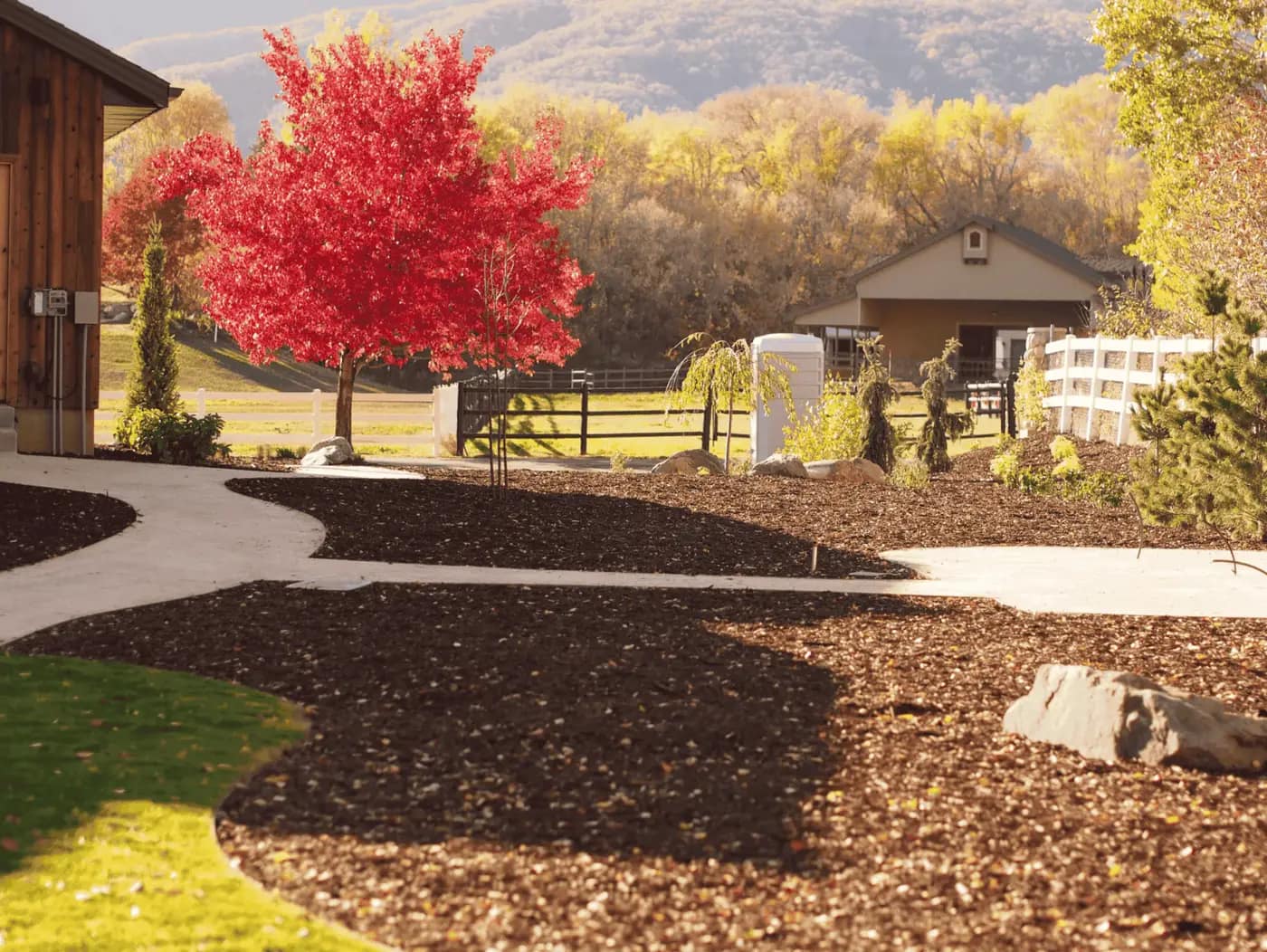
Mulch is the cheapest evaporation control you can buy for planting beds. It shades soil, slows evaporation, keeps roots cooler, and suppresses the weeds that compete for the water you do apply. USU's water-wise guidance recommends 3 to 4 inches for organic mulches like bark or wood chips and 2 to 3 inches for inorganic mulches like rock. If your beds are bare dirt in July, mulch is the first dollar to spend, and it costs a fraction of anything else in this post. Pair it with drip irrigation and beds can run on far less water than they would under overhead spray.
Soil amendments and the fine print
You will also see biochar, humic products, and moisture-crystal amendments marketed for water savings. Our take for Weber County homeowners: results vary a lot by product and soil type, and none of these are the first place to spend money. Schedule, coverage, mulch, and a moisture manager come first. If you want to experiment beyond that, treat amendments as an experiment: apply to one area, leave a control patch, and let the summer tell you whether it earned its cost.
What actually moves the number
Our order of operations for a metered Weber County yard:
1. A schedule matched to Utah's free weekly watering guide, which costs nothing
2. Fixing broken and misaimed heads so water lands on the lawn
3. Mulch on every bed
4. A moisture manager like Hydretain to stretch each watering
5. Amendments, if you enjoy experimenting
The products are real, but they are the seasoning, not the meal. Getting the schedule and the coverage right gives a yard its best shot at staying under the allotment. Skipping them and hoping a jug of anything makes up the difference does not work.
Common questions
Does Hydretain actually work?
Hydretain uses hygroscopic humectants to condense soil moisture vapor into droplets roots can use, which reduces evaporation loss. The manufacturer claims up to 50 percent watering reduction for up to 90 days per application. Our experience over about ten years of using it on our own lawn is that it noticeably stretches time between waterings, though results depend on soil, schedule, and coverage quality.
What is the cheapest way to make my lawn use less water?
Fix the schedule first: water deep and infrequent following Utah's free Weekly Lawn Watering Guide, which costs nothing. Then repair broken or misaimed sprinkler heads, mulch beds at the depth USU recommends for the material (3 to 4 inches for organic mulch, 2 to 3 inches for rock), and only then consider products like moisture managers.
Can I apply water-saving products myself?
Yes. Hydretain is sold for homeowner application in liquid form for a hose-end sprayer and granular form for a standard spreader, through online and farm-and-garden retailers. Follow the product label for application and safety instructions, as you would with any lawn product.
Do lawn products replace fixing my sprinkler system?
No. A moisture manager stretches the water your system delivers, but it cannot compensate for a zone that soaks the sidewalk or a schedule that waters shallow every day. Fix coverage and schedule first, then add products to multiply the benefit.
Sources
Related services and areas: