
If you are trying to stay under your secondary water allotment without giving up the lawn you actually use, start with the controller. Not the sod, not the rebates, not a redesign. The meter is watching now, and Pineview told KSL its customers get warning letters at 50, 75, and 90 percent of their allotment, so start with the cheapest changes. Start with the controller. Then fix bad coverage. Use the rebates if they fit. Remove grass only if those steps are not enough.
Start with the schedule, because it costs nothing
Controller settings are the first place to look because changing them costs nothing. USU Extension recommends applying one half to one inch of water per irrigation, in fewer and deeper sessions rather than a little every day.
The state publishes its free Weekly Lawn Watering Guide at conservewater.utah.gov, and Slow the Flow links to it. It tells you how many days per week to water in your county right now, and the recommendation changes through the season, so a controller should not stay on its July schedule into spring or fall. Matching your controller to that guide is a ten-minute job and it is the cheapest thing you can do this season.
Here is the biggest schedule mistake we see: a little water every single day. When there is always water sitting at the surface, roots have no reason to grow down, and when the heat hits, the grass cannot handle it no matter how much you pour on. The fix is fewer, deeper waterings. Take the minutes you are spraying daily and consolidate them into two or three deep sessions a week, sized so each one lands the half inch the weekly guide assumes, and the roots chase the moisture down. USU Extension backs this up: deeper, less frequent watering builds the root depth that gets a lawn through Utah heat, and our lawn watering post walks through measuring your system so the minutes are real numbers instead of guesses.
How much should you water each time?
One half to one inch per watering, per USU Extension, applied in fewer, deeper sessions rather than a little every day. If you do not know what your system puts out, USU's free do-it-yourself Water Check walks you through it: set several straight-sided containers around a zone, run the zone for a measured amount of time, and measure the water in each one. Enter the results in USU's tool and it hands you a customized schedule that hits the half-inch to one-inch range.
On slopes and clay soil, the state's watering guide recommends splitting the total run time into three shorter cycles with 30 to 45 minute breaks between them, so the water soaks in instead of running down the gutter. The container test also shows whether your coverage is even. If the containers collect noticeably different amounts, fix the coverage before trusting any schedule.
Tune the system before you change the yard
A tune-up catches the water you never notice hitting concrete, misting away, or running down the gutter. We covered how the meters and the $500 policy work in our post on secondary water meters, so here is the fix side of that list:
- Match nozzles within each zone so every head puts out a similar rate
- Fix or realign heads that spray concrete, fences, or the neighbor's yard
- Add pressure regulation where heads are fogging or misting
- Move beds, trees, and shrubs off spray heads and onto drip
- Add a rain and freeze sensor so the system stops when the weather does the job
One habit worth borrowing from a maintenance routine: check the little screen inside each sprinkler head at least once a year. Even with a filter on the main line, debris works its way down to the heads, and a clogged screen quietly changes flow, spray distance, and coverage. It is a five-minute fix people miss because the head still pops up and sprays something.
None of this changes how the yard looks. It changes how much of your allotment reaches the roots instead of the sidewalk. A local irrigation repair contractor can handle the tune-up if you do not want to work through the valve boxes yourself. Felter Landscape installs new sprinkler systems as part of landscape builds, but we do not take maintenance or repair calls.
The rebates worth checking
Three programs may apply to your address, and the grass-removal money is real. We are working on a South Ogden project right now where the homeowner is getting $2.50 per square foot back through Weber Basin's lawn exchange program:
- Smart controller: Utah Water Savers offers a rebate of up to $100 on eligible WaterSense-labeled smart controllers. You buy and install the controller, then the property owner applies within 60 days with the receipt and photos of the installed unit. A smart controller adjusts for weather instead of watering in September as if it were still July.
- Weber Basin lawn conversion: Weber Basin's Landscape Lawn Exchange pays $1.25 or $2.50 per square foot of converted lawn depending on your city (South Ogden is currently listed at $2.50, North Ogden at $1.25), and its Flip Your Strip program pays $1.25 per square foot for park strips, which Ogden matches. Check Weber Basin's incentive page for your city's current rate. On the project we are doing, the plan had to be approved before work started, and Weber Basin's current rules require at least 35 percent of the converted area to be covered by qualifying plants at maturity. All rock does not qualify.
- Statewide Landscape Incentive Program: the state pays per square foot in communities that have adopted qualifying water-efficiency ordinances. Apply through utahwatersavers.com.
Whichever program fits, read one rule twice: do not remove or kill any grass until the site visit is done, the application is approved, and the agreement is signed. Tearing it out early can disqualify the whole project.
What should you replace grass with?
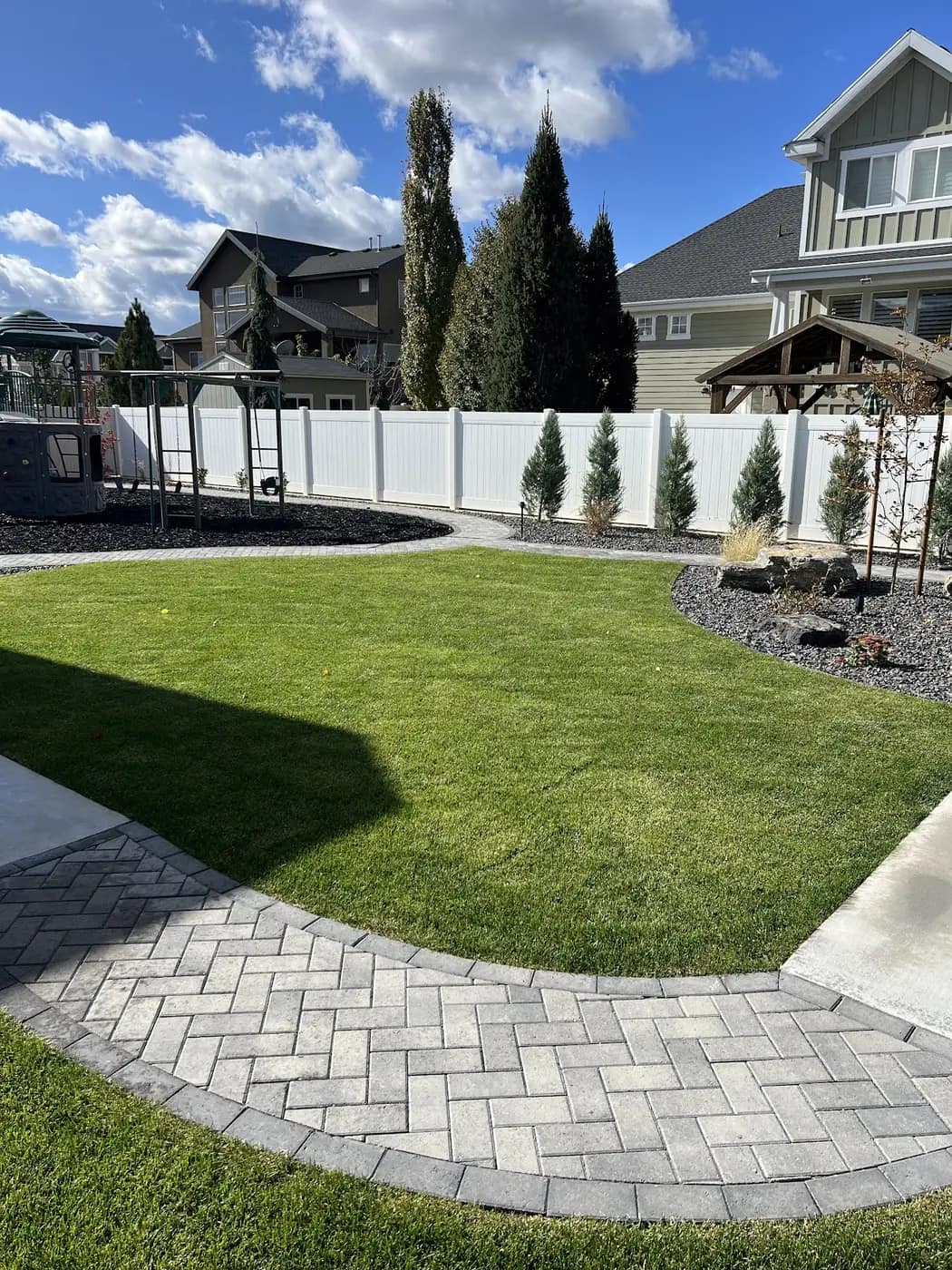
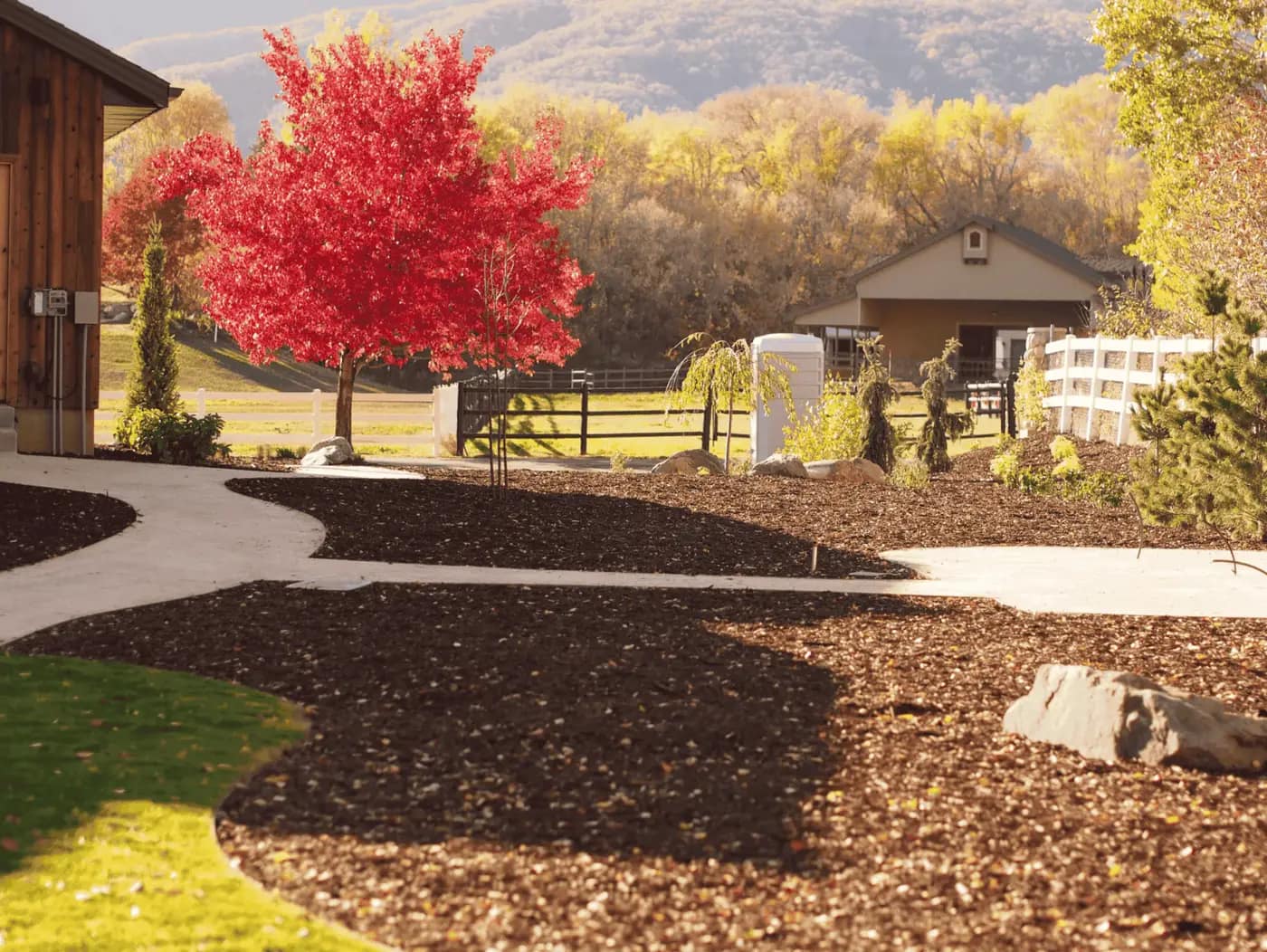
Replace the grass you never use, and keep the grass you do. Qualifying local water-efficiency ordinances prohibit lawn in park strips and in new-development areas narrower than 8 feet at their narrowest point, and there is a reason for that line: strips that narrow are too small to play on, hard to mow, and nearly impossible for sprinklers to water without soaking the sidewalk. The usual first candidates in Weber County yards are exactly those spots: park strips, narrow side yards, and steep corners. Those areas convert well to planting beds on drip with a thick mulch layer, or to hardscape like a path or a wider patio. Drip delivers water near the roots with less loss to wind and evaporation than overhead spray, mulch holds moisture in the soil, and the lawn that remains is the part your kids and dogs actually run on.
The state's free Localscapes resources show what these conversions look like if you want ideas first. When a project grows past a weekend job, our yard design work starts exactly here: deciding which zones stay turf and which stop earning their water.
A simple season plan for Weber County
Pineview's typical water season in our area runs April 15 to October 15, though the dates can shift with supply, so build the plan around that window and confirm the current schedule each spring. Before the district turns water on in spring, make sure your own valve is shut off. You want to be the one who decides when your system goes live, not the neighbor calling you at work because your front sprinklers are spraying the street. And expect the first two weeks after turn-on to be bumpy: the district is starting its own system and making repairs, so having water one day and not the next is normal, not a problem with your yard.
When you do turn it on, walk every zone once and fix what winter broke, check that each head is adjusted onto the lawn instead of the driveway, and set the controller to the weekly guide, not to memory. Through summer, follow the guide as it changes, keep watering outside Pineview's prohibited 10 a.m. to 6 p.m. window, and check your usage in your provider's portal before bumping any run times. If a threshold letter shows up, treat it as the early warning it is. As temperatures fall, reduce the schedule with the guide and blow the system out before the first hard freeze. Change one thing at a time, then check the portal. The meter will tell you what worked.
Common questions
How many days a week should I water my lawn in Weber County?
Check Utah's free Weekly Lawn Watering Guide at conservewater.utah.gov, which publishes recommended watering days per county and updates through the season. Apply one half to one inch of water each time you irrigate, per USU Extension, in fewer deep sessions rather than daily light ones.
What rebates can Utah homeowners get for saving irrigation water?
Utah Water Savers offers up to $100 back on an eligible WaterSense-labeled smart controller, with the property owner applying within 60 days of purchase. The state's Landscape Incentive Program pays per square foot to convert grass to water-efficient planting in qualifying communities, but only if you complete the pre-conversion visit, receive approval, and sign the participation agreement before removing any grass.
Will letting my lawn go brown save my allotment?
You do not have to choose between a dead lawn and a fine. USU Extension guidance says deep, less frequent watering keeps a lawn healthier on a sensible schedule by encouraging deeper roots, and converting unused areas like park strips to drip-irrigated planting can cut how much water those areas need. Make the free schedule and tune-up fixes first, then let the meter tell you if more is needed.
Who installs smart controllers and drip systems in North Ogden?
Local irrigation contractors handle smart controller installs, drip conversions, and system tune-ups. Felter Landscape installs controllers and drip as part of new sprinkler systems and larger landscape builds across Weber County. We do not take standalone tune-up or repair calls. A controller may qualify for the Utah Water Savers rebate if it is an eligible WaterSense-labeled model and the property owner completes the application within 60 days of purchase.
Sources
- USU Extension: Basic Turfgrass Care
- USU Extension: training turfgrass for drought resilience
- USU Extension: DIY Water Check
- Utah Weekly Lawn Watering Guide
- Utah Water Savers: Smart Controller Program
- Landscape Incentive Program
- Weber Basin rebates (Lawn Exchange / Flip Your Strip)
- Standard-Examiner: Flip Your Strip program coverage
- KSL: Pineview warns of $500 fine (March 24, 2026)
- Pineview Water Systems: 2026 watering restrictions
- Localscapes
Related services and areas: