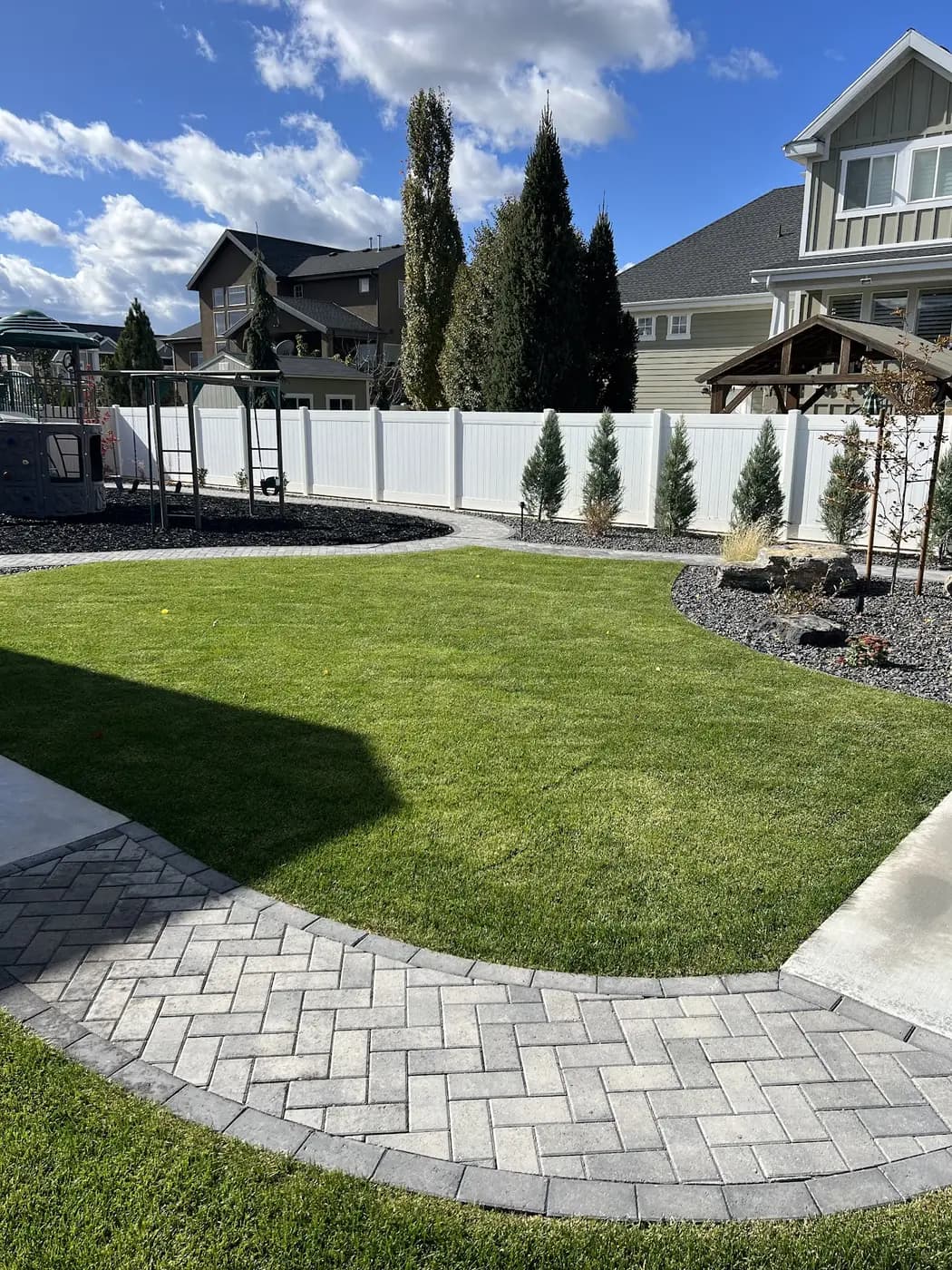
The question we keep getting on jobs this year is not about pavers or sod. It is about water meters. Customers pull up the Pineview app and show us the number: you have used 40 percent of your allotment, now 50. People are watching that percentage climb all summer and worrying about what happens when it hits 100. So here is the short version up front: Pineview says the fine applies after a customer passes 100 percent of the seasonal allotment, and warning letters come first at 50, 75, and 90 percent. Nobody gets surprised by the $500.
Why the meters are showing up now
Utah passed HB 242 in 2022 and later amended the law. It generally requires secondary water suppliers to meter pressurized end-user connections by January 1, 2030, with some exceptions, per the Utah Division of Water Resources. Secondary water is the untreated irrigation water most yards here use, separate from the drinking water inside the house. The Legislature also put $250 million in federal ARPA money into meter grants, and Pineview Water Systems told KSL in March 2026 that it is ahead of the state deadline. If your home receives pressurized secondary water and is not metered yet, your provider is working toward that date.
Historically, many secondary water customers paid a fixed annual assessment for a parcel allocation while the individual connections stayed unmetered. A Utah State University case study on Weber Basin's metering program found that adding meters, usage reports, and an online portal cut use by roughly 20 to 30 percent, mostly because people could finally see what they were using.
What happens if you go over Pineview's allotment?
Here is the over-allotment policy Pineview described to KSL in March 2026: use more than 100 percent of your seasonal allotment and you get a $500 penalty and an early shutoff, and the water is not turned back on the next season until the fine is paid. Before any of that happens, Pineview sends notice letters when you reach 50 percent, 75 percent, and 90 percent of your allotment.
Two more things worth knowing from Pineview's published rules. Watering is prohibited between 10 a.m. and 6 p.m., and wasting water or breaking the rules can also lead to a shutoff with a $500 reconnection charge. So the meter is not the only thing to pay attention to. If a 75 percent letter shows up in July, that is your signal to change something, not to panic. You can also watch your usage any time instead of waiting for letters: Pineview's meter portal is called Waterscope, and you request access by emailing meters@pineviewwater.com. Most people around here just call it the Pineview app.
What your allotment is based on
Pineview bases each property's allocation on lot size, per the KSL report: bigger irrigable lots get more water. Its published rules say that amount is adequate if the water is not wasted. We will be honest with you, though: we have called Pineview repeatedly trying to get the exact formula, and there is no simple math to share. It runs through different zones and districts, and even we cannot get a straight answer. Weber Basin, which serves other parts of the county, works a little differently: its usage reports compare what you actually used to a monthly estimated need based on your irrigated area and daily weather, and that estimate is separate from the parcel's contracted allocation. Different providers, different paperwork, same idea. The meter is now watching.
One more thing worth knowing: having a meter in the ground does not always mean it is reporting yet. My own house has had a meter installed for almost five years, and when the portal opened this spring I went through the whole signup only to be told my meter brand is not compatible with their system. If you cannot get your usage to show up in the app, you are not doing it wrong, and it is worth a call to your provider to confirm your meter is actually being read.
The waste that eats allotments is rarely dramatic. Broken heads are the obvious one, but after a lifetime in this trade the thing that still surprises us is simpler: most people genuinely do not know how much water a yard needs. Nobody had to know, because nobody was measuring. Now the meter is doing the measuring, and the guesswork shows up as a percentage in an app.
Common places irrigation water gets wasted
Most overwatered yards in Northern Utah are not overwatered on purpose. The waste hides in the system. When we look at an irrigation setup, this is the usual-suspects list:
- Spray heads watering concrete instead of grass, or fogging because the pressure is too high
- Zones scheduled for the same minutes in May as in July, even though spring grass needs far less
- Rotor and spray zones mixed together, so one is always overwatered when the other is right
- Flower beds and shrubs on spray heads when they should be on drip
- No rain or freeze shutoff, so the system runs in a storm
None of these show up on your bill as a line item. They quietly eat your allotment. Start with a system check before assuming the whole yard needs to change: a broken head or a bad controller setting may be the real problem. A local irrigation repair contractor can inspect an existing system. Felter Landscape installs new sprinkler systems as part of landscape builds, but we do not take repair calls.
How do you keep a lawn green on less water?
You do it with timing and hardware, not by letting the lawn die. Many Utah lawns get watered more often than the state's weekly guide recommends. Deep, less frequent watering encourages deeper roots and better heat tolerance, and the free weekly Lawn Watering Guide at slowtheflow.org tells you how many days per week to water for current conditions.
Two upgrades are worth checking first:
- A smart controller that adjusts run times to the weather automatically, so your September schedule is not your July schedule
- Drip conversion for beds, trees, and shrubs, which puts water at the roots instead of misting it into the air
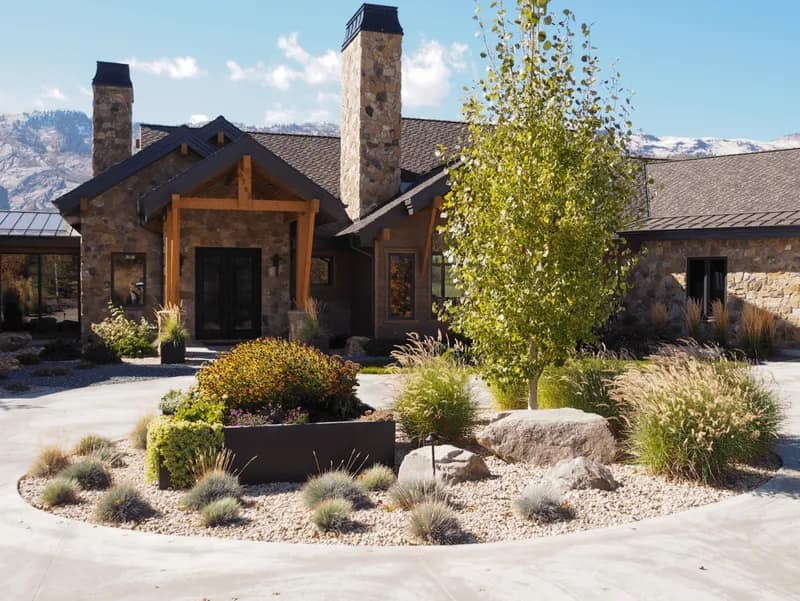
Utah Water Savers (utahwatersavers.com) runs rebate programs on smart controllers and grass removal, so check what is available for your address before you buy anything.
When it makes sense to redesign instead
If your yard is mostly thirsty turf, there is a point where tuning the sprinklers is not enough, and the better answer is design. That does not mean gravel and cactus. The design goal is simple: keep a healthy lawn where you actually use it, put beds on drip everywhere else, hold moisture in the soil with mulch, and use patios and walkways in the spots grass never did well anyway.
If you are already planning yard work, winter is the easiest time to work the water allotment into the plan, while the water is off and the schedule is open. Our landscape design page shows how we approach it.

Common questions
How much is the fine for going over your secondary water allotment in Weber County?
Pineview Water Systems told KSL in March 2026 that customers who use more than 100 percent of their seasonal allotment get a $500 penalty and an early shutoff, and the water is not turned back on the following season until the fine is paid. Warning letters go out at 50, 75, and 90 percent of the allotment first.
What is a secondary water allotment based on?
For Pineview customers, the seasonal allocation is based on property size: larger irrigable lots receive larger allocations. Pineview's published rules say the amount is adequate if the water is not wasted. Weber Basin also assigns each parcel a contracted allocation, and its monthly reports separately compare actual use with an estimated need based on irrigated area and daily weather.
Do all homes in Utah have to get secondary water meters?
Homes on pressurized secondary systems generally do. Utah's HB 242, passed in 2022, requires suppliers to meter pressurized secondary connections by January 1, 2030, with some exceptions, and the state appropriated $250 million to help pay for the meters. Pineview says it is ahead of that deadline.
Who can help me lower my secondary water use in North Ogden?
A local irrigation repair contractor can audit an existing system and fix broken or misaimed heads. Felter Landscape designs high-water areas and installs new sprinkler systems, smart controllers, and drip irrigation as part of landscape builds across North Ogden and greater Weber County. We do not take standalone maintenance or repair calls. Utah Water Savers rebates may offset part of the hardware cost.
Sources
Related services and areas: